|
|
International
DanceScience
Development
Program
International
Medical,
Scientific and
Educational
Initiative of
the United
Nations Arts
Initiative and
the Sports
Medicine &
Science
Institute.
BalletEquestria
Rider & Equine Development
Programs
|
Stephen M. Apatow's instructional programs are accredited by
the International
Dance
Council
(UNESCO).
Learn more
about
specialized
dance, sports
and Olympic
development
programs:
|
In
The Spotlight
|
|
|
Rider Biomechanics Clinics
 2006:
Central
New England
United States
Pony Club,
Massachusetts. 2006:
Central
New England
United States
Pony Club,
Massachusetts.
 2003:
CSDEA Clinics
& Year End
Meeting -
Minneapolis/St.
Paul, MN. 2003:
CSDEA Clinics
& Year End
Meeting -
Minneapolis/St.
Paul, MN.
2002:
St. Louis Area
Dressage
Society
2000:
December: CDS
Ventura, CA *
2000:
August: Equest
Training
Center:
Reno,NV *
2000:
April:Cross
Winds Farm,
Chagrin Falls,
OH
2000:
February:
Geikie Clinic:
CT
1999:
Western
Pennsylvania
Dressage
*
1999: Eastern New York
Dressage &
CTA
1998: USDF Region 5 Camp,
Jackson Hole,
WY *
1997: USDF Adult Camp,
Eagle, ID
*USDF University Credits
Related:
- The
Next level: Learning
About
Biomechanics
by Kimberly
Cruser.
For those of
us on the
continuing
search for
improvements
to our riding
skills, the
USDF
University
accredited
lecture for
members of the
Ventura and
Pomona CDS
chapters in
Dec 2000, was
a great
opportunity to
learn more
about the
biomechanics
of the human
body and the
muscle control
and tone
needed to ride
well. Article
submitted to
USDF
Connection.
|
|
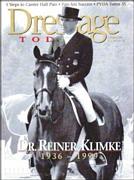
Dressage Today: April 2000
Issue
Ask The Expert
Stephen M. Apatow
"I
am a
middle-aged
rider who has
come back to
riding after
about 15
years. I have
an 8-year-old
Thoroughbred
cross gelding
that I work at
First Level,
hoping to do
some showing
eventually. I
find I am not
as flexible as
I used to be
and have
recently heard
about
"biomechanics"
and how it
might help me.
I'm not sure
what is meant
by the term as
it refers to
riding horses.
Can you
explain what
it is and why
it is
important to
dressage
riders like
me?"
Click here for the Article
|
|
.Equestrian
Development
Clinics
&
Private
Consultations
The
science of
classical
ballet
training, as
used in
Eastern Bloc
development
programs for
gymnastics and
figure
skating, is
the reference
point for the
optimization
of fundamental
movement
mechanics and
the precision
execution
classical
dressage
technique.
Inconjuction
with a lecture
presentation,
individual
consultations
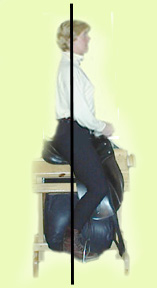
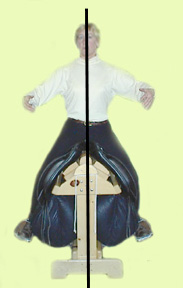
cover the rider specific mechanics of a connected seat, posting,
halt/half
halt, turn
mechanics,
spiral seat
and lateral
movements.
|
Expanding
Human to
Veterinary
Biomechanics Applications
.
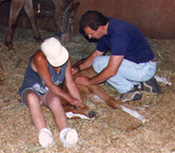
In
1994, after
learning about
the
application of
the procedure
in a cervical
entrapment
neurapathy
case on the
wife of a
physician at
Yale Medical
School, a
veterinarian
in Northern
Nevada
requested our
help with a
spinal
condition
involving a 12
year old
basset hound.
The sucess of
this case in a
quadruped
application
opened the
door for work
on hundreds of
sporthorses in
dressage,
hunter-jumper
and western
training
programs. For
additional
information,
visit the:
|
|
..
.. |
|